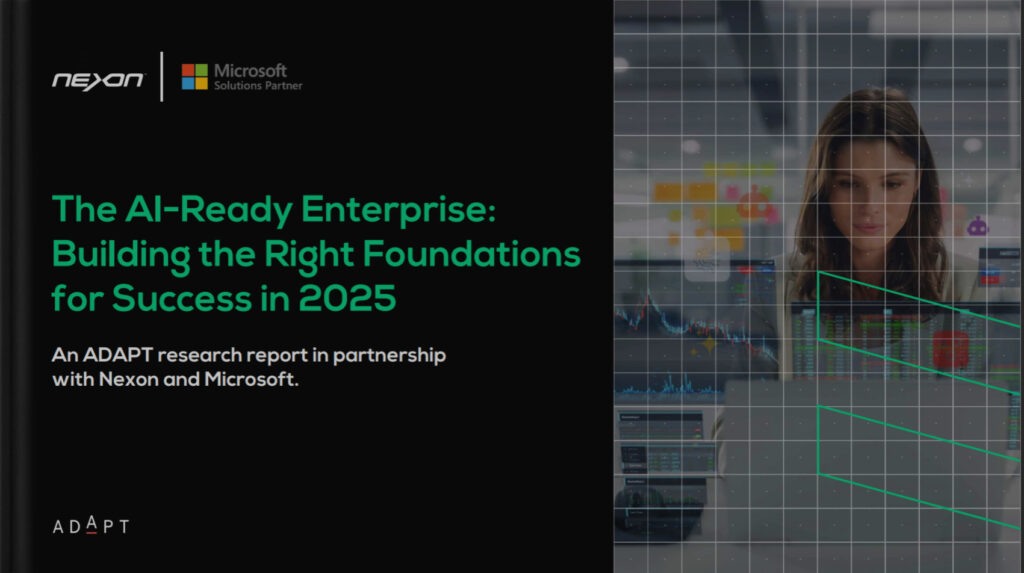
As AI adoption accelerates, data maturity and infrastructure modernisation have emerged as main enablers of AI success. This ADAPT research report, in partnership with Nexon and Microsoft, draws from comprehensive surveys of Australian CIOs, CDAOs, and infrastructure leaders to highlight significant shifts in AI readiness. These reveals a remarkable evolution in how organisations approach AI, moving from cautious observation to strategic implementation.
Key insights include:
- By the end of 2024, AI readiness among organisations increased from 9% to 30%, reflecting growing confidence and understanding of AI’s business value.
- 60% of businesses plan to consume AI through cloud-based services rather than building in-house capabilities, prioritising agility and scalability.
- SMBs and mid-market organisations stand at a crossroads, where robust data foundations, modern infrastructure, and critical skills will determine their ability to harness AI’s transformative power.
This report provides actionable insights to help you achieve AI readiness, embrace strategies for maximising operational efficiency and adaptability, and take a strategic approach to advancing data, infrastructure, and skills development.
Download this report to position your organisation for AI-driven success this 2025.
Whitepaper
The AI-Ready Enterprise: Building the Right Foundations for Success in 2025
Thank you for submitting your info.
The Whitepaper The AI-Ready Enterprise: Building the Right Foundations for Success in 2025 download will begin shortly.
If your download doesn't start immediately, click here to download.
This report is created
in partnership with: