For not-for-profit (NFP) leaders, AI is irresistible for its promise to help you do more for the communities you serve without stretching lean teams and tight budgets.
Some Australian NFPs are already there, reaching more people, delivering better care and freeing staff to focus on the work that matters.
A sector under pressure, and a genuine opportunity
Australia’s not-for-profit sector employs 1.54 million people – more than 10% of the national workforce – and relies on 2.4 volunteers for every paid staff member.1
According to the Australian Charities Report, total sector expenses exceeded $212 billion – up $17 billion in a single year – as the cost of delivering services outpaced revenue growth.1
The organisations doing this work are built for efficiency by necessity. Every hour saved on administration is an hour returned to the mission, and every dollar freed from back-office complexity is one more that reaches the people who need it.
This guide explores what those foundations look like and how Australian NFPs are already putting them to work.
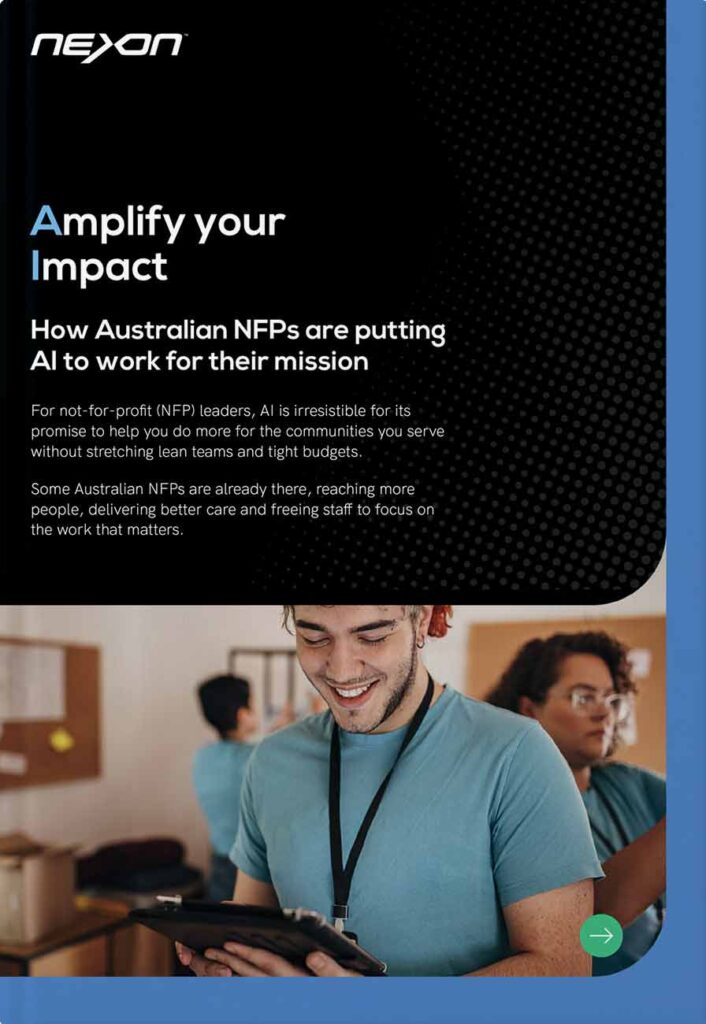
eBook
Amplify your Impact — How Australian NFPs are putting AI to work for their mission
Thank you for submitting your info.
The eBook Amplify your Impact — How Australian NFPs are putting AI to work for their mission download will begin shortly.
If your download doesn't start immediately, click here to download.
Reference:
Australian Charities and Not-for-profits Commission (ACNC), Australian Charities Report, 11th edition, 2025